Naming Ceremonies, Photographed with Understanding
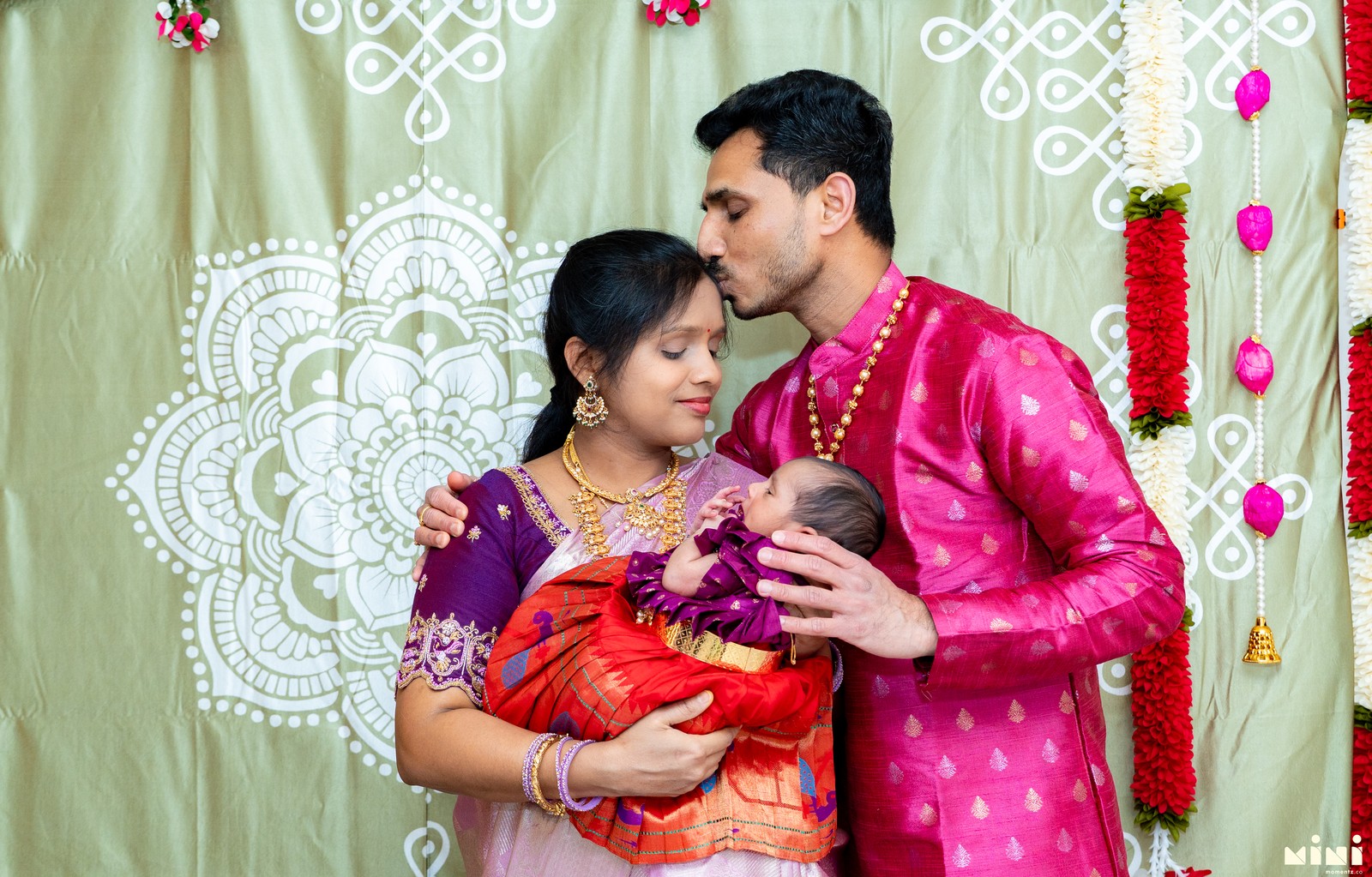
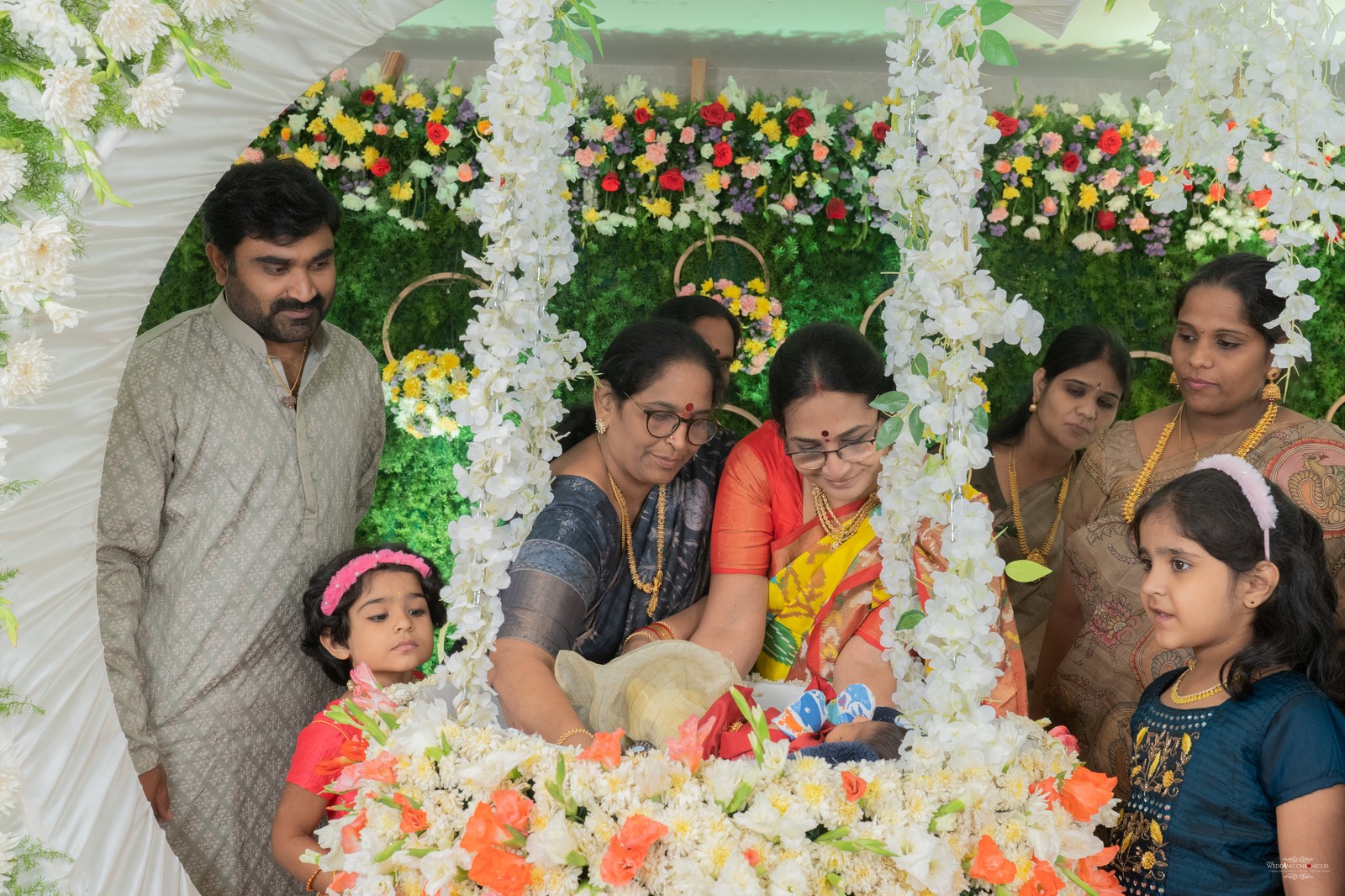
The naming ceremony — known as Thottil in Telugu and Tamil traditions, or Namakaranam more formally — is one of the most significant early milestones in a South Indian family's calendar. The baby's name is formally given, often whispered by a parent or elder, and the baby is placed in a decorated cradle for the first time.
Because the key moments happen quickly and are not repeated, we position ourselves in advance based on understanding the ceremony sequence — not by asking the family to pause or stage a moment that has already passed.
How It Works
What's Included
- Half-day coverage — typically 4-5 hours including preparation and celebration
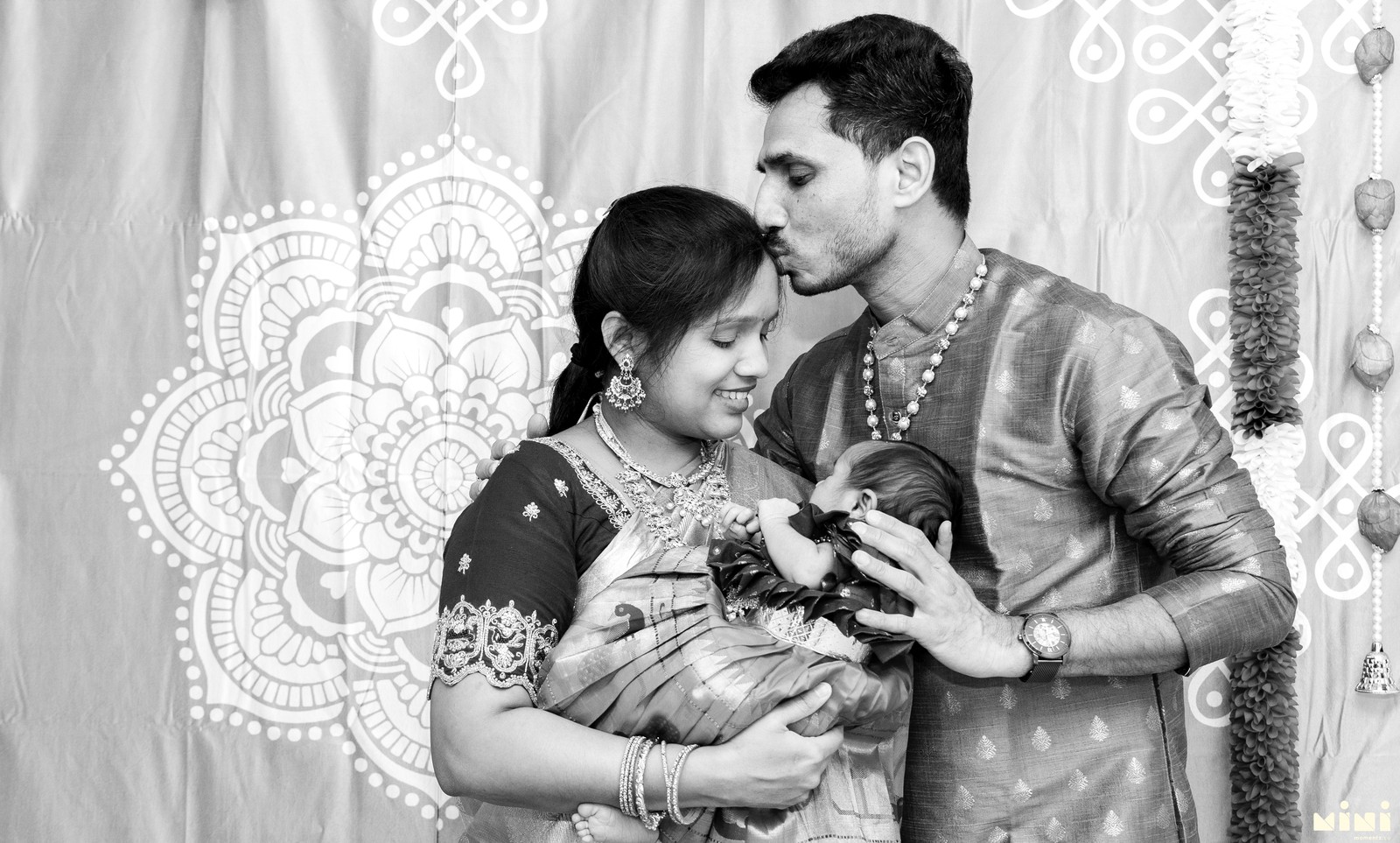
- 40-60 fully edited photographs covering rituals, candid moments, and family portraits
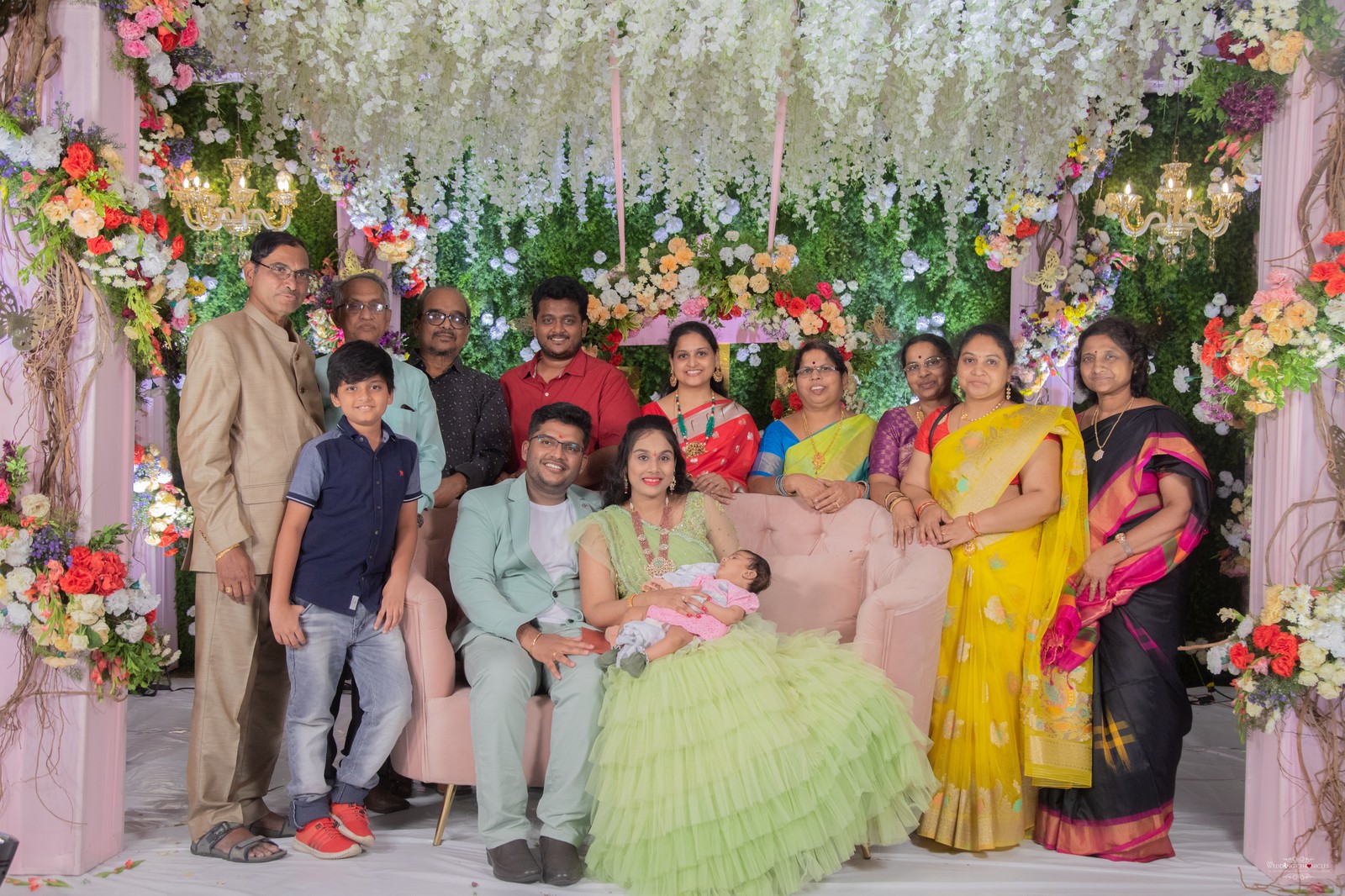
- Multi-generational family portraits with all relatives present
- Optional cinematic highlight film available as an add-on
Cultural understanding matters here: We know the difference between a Telugu Thottil and a Tamil Namakaranam, and the small variations within each. No briefing required — we simply understand what's happening and photograph it respectfully.
Understanding the Significance Before the Day
A naming ceremony moves quickly through several distinct moments — preparation of the decorated cradle, the priest's rituals, the whispered or announced naming, and the first placement of the baby into the cradle. None of these moments repeat themselves, which means a photographer unfamiliar with the sequence risks missing the most important parts entirely. We take time before every naming ceremony to understand your family's specific structure and timing, so we're already positioned correctly when each moment happens rather than reacting after it's passed.
Photographing With Respect for the Ritual
We use natural light only during the ceremony's core ritual moments, avoiding flash that could distract from the atmosphere your family has created. Our approach is to observe quietly from the edges, allowing the ceremony to unfold exactly as your family intends, rather than directing or staging moments for the sake of a better angle.
Coordinating With Your Priest or Religious Officiant
Many naming ceremonies are guided by a priest who manages the ritual's specific timing and sequence. Where possible, we like to have a brief conversation with the priest or family beforehand to understand the planned flow of the ceremony, ensuring we're positioned correctly for each key moment without interrupting the religious proceedings themselves.
Photographing Multi-Generational Moments
Naming ceremonies frequently bring together three or even four generations of a family in one room — great-grandparents, grandparents, parents, and the new baby. These multi-generational moments are often deeply significant and not easily repeated, so we prioritise capturing them clearly and intentionally rather than only focusing on the central naming ritual itself.